
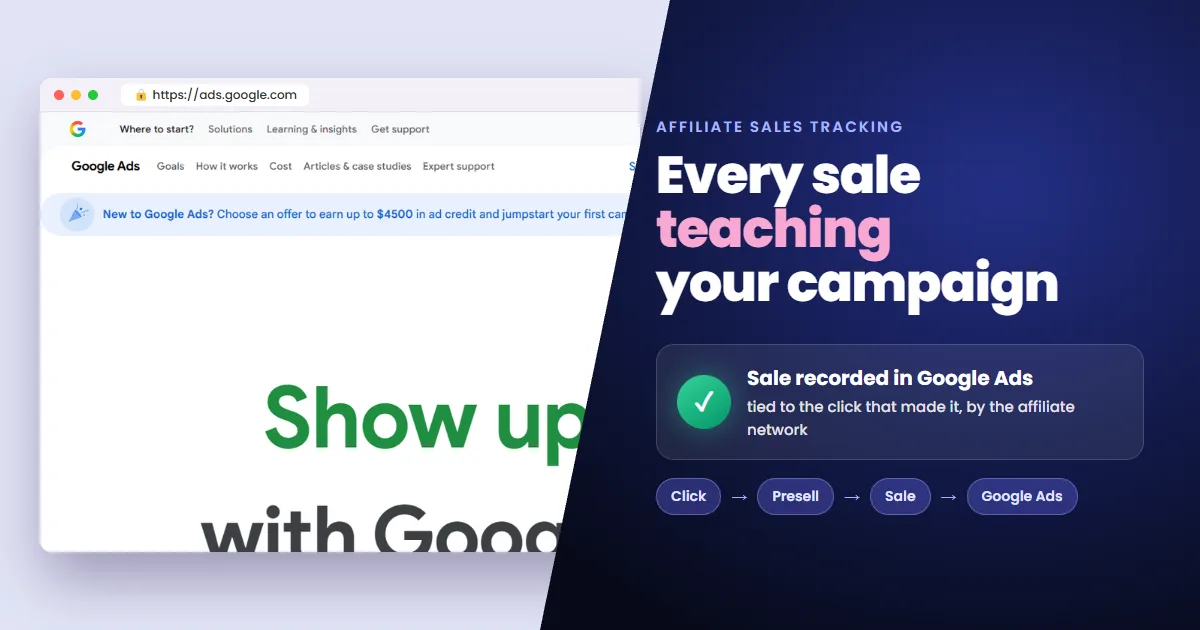
To track affiliate sales on Google Ads, you link the ad click to the sale the network records and send that sale to Google as a conversion. Without it, the campaign never learns and your cost per sale never drops. Here is how it works and what you need.
- The problem: the sale lives inside the affiliate network and Google never hears about it.
- The key: the GCLID, the code Google stamps on every ad click.
- The 3 ways: a tag on the thank-you page, offline conversions through the API, and the network's postback.
- The payoff: a campaign that learns from every new sale and finds new buyers.
The sale happens, but Google never finds out
Google Ads only sees what happens up to the click. The sale happens somewhere else: on the ClickBank, Digistore24, MaxWeb or any other network's checkout. That record stays inside their system.
To Google, the click that turned into a sale and the click that went nowhere look the same. It keeps showing your ad to people who look like everyone who clicked, not like the ones who bought. There is, however, one code that reconnects both ends.
GCLID (Google Click Identifier) is the unique code Google appends to the URL on every ad click. It identifies that click: keyword, ad, time and device. It is the key that ties a sale to the click that produced it.
 Read alsoGoogle Ads GCLID Tracking for Affiliates: Full Guide
A campaign without conversions is a campaign that never learns
Google Ads runs on machine learning. It tests combinations of keyword, audience, schedule and device, looking for the pattern of who converts. With no conversion recorded, there is no pattern to find.
In practice, advertising without tracking costs you three things: automated bidding has no data to optimize, you never know which keyword sells, and every day running is learning lost. That history does not come back later.
Google recommends at least 30 conversions in 30 days for strategies like Target CPA to work reliably. Every tracked sale counts toward that base.
How it works, from click to sale
A tracked sale travels through five steps. The fourth is the one that needs setting up.
- 1Click: the visitor clicks your ad and Google writes the GCLID into the URL.
- 2Presell: your presell captures that GCLID and passes it along in the affiliate link, inside the network's tracking field.
- 3Sale: the visitor buys and the network records the sale with that code attached.
- 4Conversion: a system receives the sale from the network and records it in Google Ads as a conversion for that click.
- 5Learning: Google sees that this profile buys and starts looking for similar profiles.
Affiliate networks do not send the sale to Google on their own. Someone has to build that bridge, and there are three ways to do it.
The 3 ways to get the sale into Google Ads
1. Conversion tag on the thank-you page
This is Google's default method: a tag that fires when the purchase completes. For affiliates it almost never works: the thank-you page belongs to the network or the vendor, and you cannot install code on it.
2. Offline conversions through the Google Ads API
You store the GCLID of every click and, when the sale happens, send the purchase event to Google through the offline conversions API. It is the most precise method, but it requires programming and a server to receive and send the data.
3. The affiliate network's postback
ClickBank, Digistore24, MaxWeb, BuyGoods and others offer a postback URL: an address they call on every sale, carrying the click code. A system receives that call and records the conversion in Google Ads. It is the most reliable way when the network offers it.
Building the bridge by hand takes a server, an API and the right URL parameters. Affiliates often spend days, or pay a developer, before the first sale shows up in Google Ads.
What changes once sales reach Google
With sales recorded, the campaign stops flying blind. Affiliates who track report the same pattern:
- Cost per sale drops after the first few dozen conversions, because Google starts looking for people like the ones who bought.
- Automated bidding actually works: Target CPA and Maximize Conversions get real data to optimize.
- You see what sells: the keyword, ad and schedule that produce sales, and you cut the rest.
- Advanced strategies unlock: Target ROAS and remarketing audiences built from real buyers.
Which affiliate networks let you track on Google Ads
Almost all of them offer some integration, but the level varies. Look for “postback”, “webhook” or “pixel” in your network's help center.
- ClickBank: postback URL and tracking parameters in the link.
- Digistore24: native, well-documented postback URL.
- BuyGoods and MaxWeb: postback URL available to affiliates.
- Dr.Cash, CPA.House and TerraLeads: standard CPA-network postback.
- AdCombo and MediaScalers: full integration through postback.
- Hotmart: webhook and conversion pixel.
How long until the campaign learns
Google starts adjusting from the first conversions, but consistent results show up after a few weeks of accumulated data. So the sooner the first sale reaches Google, the sooner your cost per sale starts to fall.
Every day without tracking is a day of learning lost. Your ad investment stays the same, but Google learns nothing from it.
Frequently asked questions about tracking sales on Google Ads
Does Google Ads track affiliate sales on its own?
No. Google records the click, but it has no access to the affiliate network's sales system. Someone has to build the bridge: a postback, the offline conversions API or an affiliate tracking tool.
What happens if I run ads for weeks without tracking?
The campaign keeps showing your ad to random profiles and automated bidding has no data to optimize. That history cannot be recovered: Google only learns from the sales that arrive after tracking is switched on.
Do I need to code to track sales?
With the manual method, yes: the offline conversions API and postbacks need a server and code. Affiliate tracking tools make that connection in a few clicks, with no script to install.
How many conversions do I need before Google optimizes?
Google recommends at least 30 conversions in 30 days for strategies like Target CPA. Before that, manual bids or Maximize Clicks are usually safer while volume builds up.
Tracking is not an advanced feature, it is the starting point
For an affiliate on Google Ads, sales tracking is the foundation of any campaign meant to turn a profit. Without it, you pay Google to look for people who will never buy. With it, every sale makes the campaign sharper.
 AdsXEverything you need to sell as an affiliate
If you want every sale to teach your campaign
AdsX has over 5,000 users and connects your affiliate network to Google Ads for you: every sale is recorded in the campaign automatically, with no server and no code.
More on Affiliate tracking
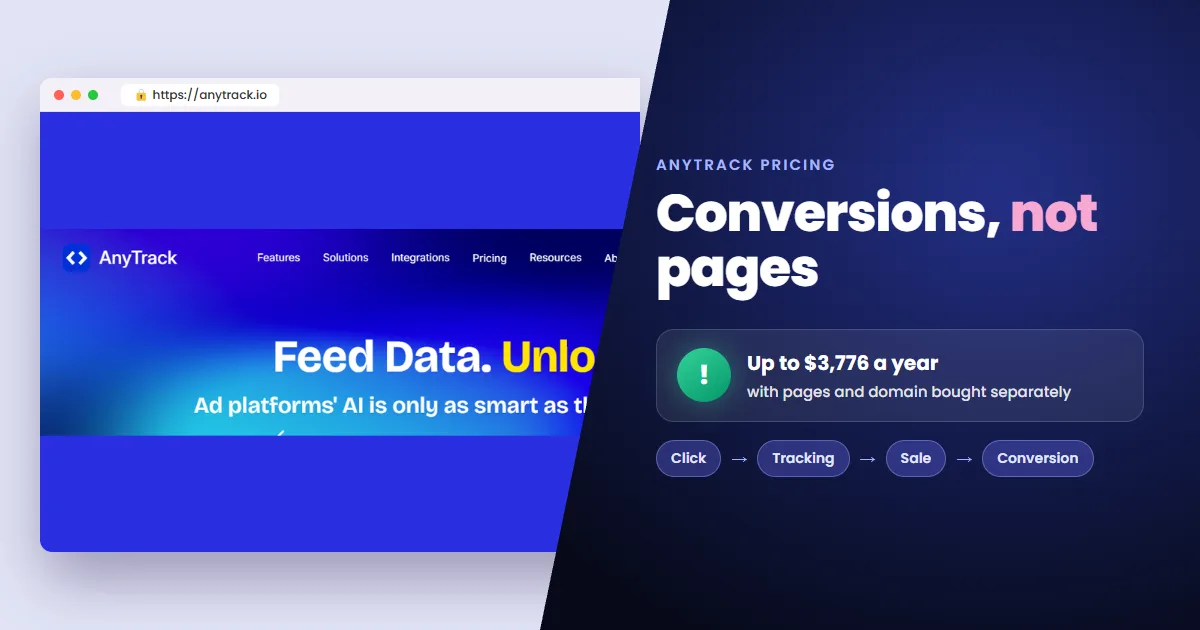 AnyTrack Pricing: Plans, Google Ads Tracking and Reviews
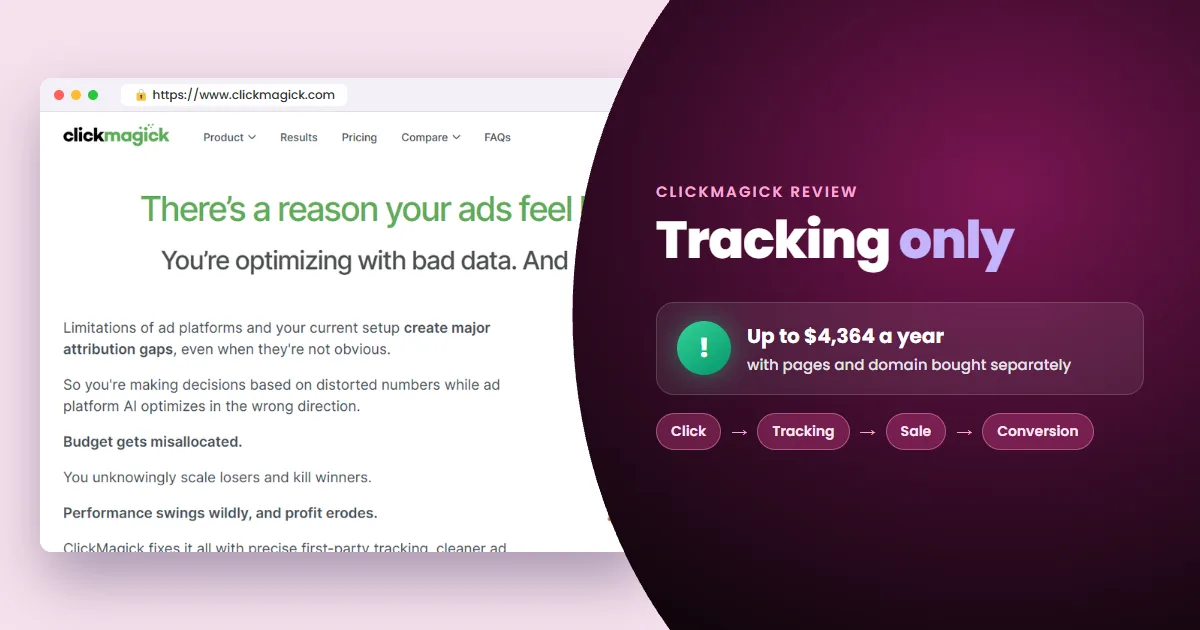 ClickMagick Review 2026: Pricing and Is It Legit?
 ClickBank Tracking Pixel for Google Ads